
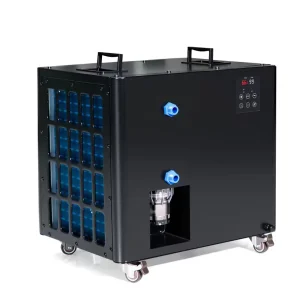
Pre-configured compact thermodynamic systems tested for high-density metropolitan facilities, featuring eco-compliant low-GWP refrigerants and whisper-quiet operation.
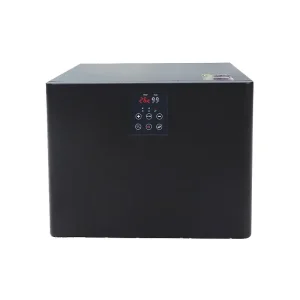
Analyzing high-efficiency thermodynamic cooling demands across Greater Tokyo, from the tech clusters of Minato and Koto to high-end recovery suites in Shibuya.
The Greater Tokyo Metropolitan Area represents one of the world's most intricate and demanding operating environments for thermodynamic cooling equipment. Facing strict floor-area ratio constraints (FAR), elevated kilowatt-hour costs under TEPCO commercial rate schedules, and Japan’s stringent Act on Rationalizing Energy Use (Energy Conservation Act), Tokyo business operators cannot rely on conventional, bulk air-cooled machinery. Cooling systems within the Kanto region are mandated to deliver maximum heat rejection capacity per square meter of footprint while meeting rigorous seismic and decibel ratings.
Within this dense commercial ecosystem, water-cooled chillers serve as the foundational backbone for two rapidly accelerating sectors: advanced commercial contrast therapy (spas, boutique biohacking gyms, sports rehab centers across Roppongi and Ginza) and precision sub-line cooling for light industrial and laboratory cleanrooms in Kawasaki and Yokohama. Water-cooled architecture solves Tokyo’s critical dilemma: removing condensing heat from sealed underground floors, multi-tenant vertical buildings, and sound-sensitive wellness zones where exterior airflow is heavily restricted.
Tokyo real estate commands world-record rental yields. Our water cooled chillers minimize equipment footprint by up to 48% compared to traditional air-cooled modules, allowing seamless closet or plant-room integration.
Multi-tenant commercial leases in Chiyoda and Shinjuku enforce strict noise pollution ordinances. Dedicated vibration dampening and water heat dissipation ensure whispering decibel levels during continuous cycles.
Every customized chiller complies with Ministry of Economy, Trade and Industry (METI) technical standards and Electrical Appliance and Material Safety Law (PSE mark) readiness for seamless commercial operation.
Combining world-class manufacturing agglomeration with rigorous Japanese industrial standards (JIS-aligned quality protocols) to deliver unrivaled procurement margins.
For Tokyo distributors, wellness project developers, and mechanical contractors, sourcing directly from high-tier Chinese production facilities provides a definitive commercial edge. With direct sea freight lanes connecting the Greater Bay Area and Ningbo/Shanghai ports directly to the Port of Tokyo and Yokohama within 4 to 6 business days, transit lead-times mirror domestic regional distribution while offering full-scale custom OEM flexibility.
Our chiller lines integrate genuine GMCC, Panasonic, and Highly rotary compressors combined with pure titanium heat exchangers. These titanium coaxial coils guarantee near-zero corrosion even when exposed to high-salinity onsen minerals, ozone dosing, or UV sanitizer chemicals common in Tokyo recovery facilities.
Japanese commercial projects frequently demand customized form factors, custom stainless-steel (SUS304/SUS316) cabinetry, specialized 100V 50Hz/60Hz dual-frequency electrical configurations, and private-label firmware interfacing with central building management systems (BMS).
By bypassing multiple domestic trading intermediaries in Japan (Shosha), Tokyo corporate buyers reduce their capital expenditure (CapEx) per cooling node by 40% to 60%. This structural saving enables rapid scaling of commercial cold plunge facilities, cryogenic athletic clubs, and process-cooling infrastructure across Japan.
Engineered to deliver continuous thermal stability across specialized sectors with zero performance drop during peak summer ambient shifts.
| Tokyo Industry Sector | Specific Application Context | Thermal Challenge | Recommended Chiller Unit |
|---|---|---|---|
| Commercial Spas & Onsen Centers | Cold plunge recovery tubs in Ginza, Roppongi, and Akasaka wellness facilities | Continuous thermal turnover; chemical sanitization (chlorine/ozone) | 1.5HP High-Flow R32/R290 Chiller with Titanium Exchanger |
| Athletic & Martial Arts Hubs | Cryo-therapy cold plunge suites in Koto & Shibuya performance gyms | Rapid temperature pulldown (from 25°C to 3°C) under high bather loads | 1.0HP to 1.5HP High-End Inverter Units with 4-Point Porting |
| R&D Bio-Labs & Life Sciences | Laser cooling, centrifuge cooling, and micro-reaction baths in Kawasaki | Zero tolerance for thermal variance (±0.5°C required); vibration sensitivity | 0.3HP to 0.5HP Micro-Heat (MH) High-Precision Water Chillers |
| Luxury Residential Penthouses | Integrated terrace ice plunge tubs and private contrast suites in Minato-ku | Ultra-low acoustic thresholds; aesthetic exterior stainless integration | 0.5HP Customized Silent Series with Smart BMS/App Connectivity |
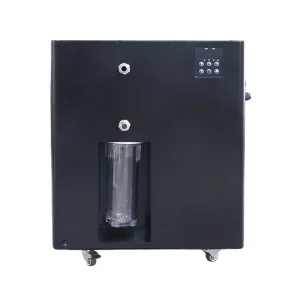
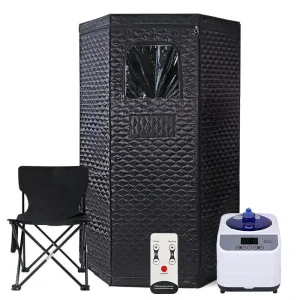
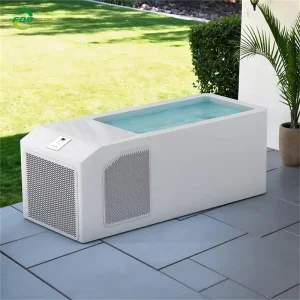
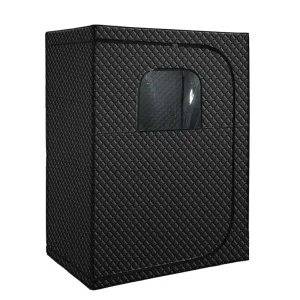
Explore our export-certified thermal conditioning machinery, modular ice bath systems, and commercial far-infrared recovery modules ready for Tokyo distribution.
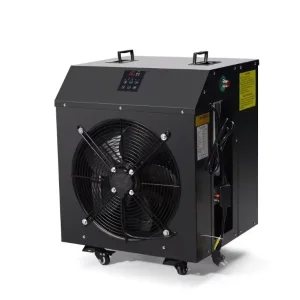
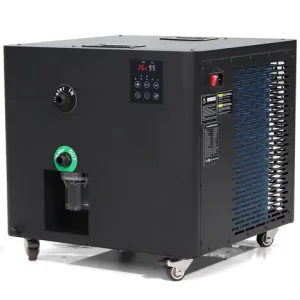
Essential guidance on electrical standards, refrigerant compliance, logistics clearance, and OEM customization protocols.
Eastern Japan (including Tokyo, Kanagawa, Chiba, and Saitama) operates strictly on a 100V or 200V 50Hz grid, whereas Western Japan operates on 60Hz. Our custom engineering department fabricates variable-frequency DC inverter water-cooled chillers or custom-wound motors designed explicitly for 100V/200V single-phase 50Hz frequency stability, preventing the premature compressor overheating common with generic 60Hz imports.
Yes. We specialize in low-GWP (Global Warming Potential) alternative refrigerants including pure R290 (propane-based hydrocarbon, GWP < 3) and R32. These units strictly comply with Japan’s Ministry of the Environment guidelines, dramatically lowering operational administrative reporting and simplifying disposal procedures for Tokyo commercial facility operators.
Ocean freight transit from our southern logistics terminals directly to Tokyo Port (Oi or Aomi container terminals) or Yokohama Port takes approximately 4 to 6 days. For consolidated LCL orders, palletized chillers undergo pre-shipment fumigation and export crating using ISPM 15 compliant heat-treated timber to guarantee seamless clearance with Japanese Customs (Nippon Automated Cargo and Port Consolidated System - NACCS).
We supply a complete 1% to 2% critical spares package (electronic expansion valves, temperature sensors, flow switches, and display controllers) with every commercial wholesale container shipment. In addition, our engineering team provides comprehensive bilingual schematics (English/Japanese) and remote video diagnostics to support your local mechanical contractors across Greater Tokyo.