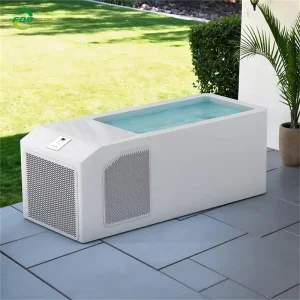
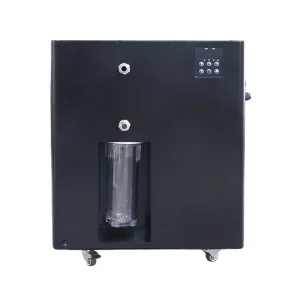
Explore our industrial-tested water cooling and infrared thermal recovery systems engineered under strict ISO, CE, and RoHS protocols for global B2B procurement programs.
The global demand for high-performance aquatic cooling technology has transitioned from specialized niche applications into a cornerstone of institutional hospitality, athletic performance, and luxury residential infrastructure.
In modern architectural hydraulics and aquatic facility planning, thermal equilibrium is as vital as mechanical filtration and sanitation. Historically, large commercial swimming pools relied primarily on ambient heat exchange or evaporation towers to dissipate thermal energy. However, accelerating climate volatility across the Middle East (GCC), Southern United States, Mediterranean Europe, and Southeast Asia has pushed summer pool basin temperatures upwards of 36°C (96.8°F). At these elevated thresholds, chlorine degradation accelerates exponentially, bacterial bloom risks soar, and swimmer physiology suffers significant heat distress. As a direct result, the swimming pool water chiller market is experiencing unprecedented double-digit compound annual growth (CAGR).
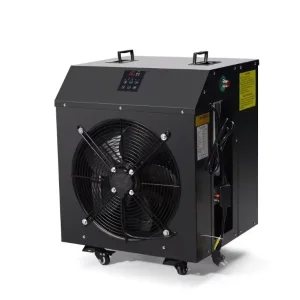
Commercial pool chillers serve a dual purpose in institutional environments. While recreational resorts, luxury hotel rooftops, and municipal water facilities require mass displacement chilling to preserve comfortable 26°C–28°C bath temperatures, athletic complexes and human performance centres demand rapid cryogenic pulled-down water loops (ranging down to 2°C–5°C) for systemic contrast therapy and post-exercise muscular decompression. Designing industrial chillers capable of executing both duties requires profound engineering know-how, thermodynamic modeling, and high-efficiency component selection.
Equipped with commercial scroll or high-torque rotary DC compressors utilizing environmentally friendly low-GWP refrigerants (R290 and R32), ensuring compliance with the EU F-Gas Directive, EPA AIM Act, and North American UL safety codes.
Utilizing pure seamless Grade 1 Titanium coaxial heat exchangers. Resistant to chlorine pitting, sodium chloride corrosion in saltwater pools, ozone oxidation, and acid sanitizers, delivering an extended lifespan of 15+ years in harsh ambient environments.
Integrated programmable PID algorithmic controllers and smart dual-band Wi-Fi/Bluetooth modules enable automated real-time thermal compensation, remote telemetry monitoring, pump dry-run cutoffs, and energy-saving eco-mode operations.
How HK Dongda leverages deep vertical cluster integration in the Pearl River Delta to deliver uncompromised industrial engineering, high-volume agility, and stringent cost control for worldwide distributors.
The manufacturing ecosystem for commercial heat pumps and water cooling machinery has undergone a fundamental transformation over the past decade. China’s Pearl River Delta (encompassing Guangzhou, Foshan, Zhongshan, and Shenzhen) accounts for more than 70% of the world’s HVAC thermal equipment fabrication capacity. HK Dongda Supply Chain Limited harnesses this industrial ecosystem to deliver measurable advantages across every procurement stage:
Within an 80-kilometer supply radius, our production facilities source precision CNC sheet metal enclosures, laser-welded titanium heat exchanger tubing, microchannel condensers, and SMT circuit boards, minimizing sub-assembly lead times from weeks to hours.
Every single chiller unit passes through computer-controlled thermodynamic load testing chambers simulating ambient temperatures from -10°C to 50°C. Units undergo helium leak detection, electrical hipot dielectric testing, and sound decibel audits prior to packing.
From rapid 3D CAD modeling and custom-molded ABS/powder-coated galvanized housings to proprietary iOS/Android telemetry apps and 4-point manifold modifications, our engineering team executes tailor-made custom projects in under 30 days.
Our chiller platforms are designed with universal power flexibility: 110V/60Hz for North American circuits, 220–240V/50Hz for Europe, the UK, Australia, and Asia, and 3-phase commercial options for large institutional resort pool loops.
Selecting the precise horsepower, flow displacement rate, and thermal coefficient is essential to prevent system under-sizing and premature compressor fatigue in demanding aquatic installations.
| Model Series | Cooling Capacity (HP / kW) | Optimal Water Volume | Heat Exchanger Spec | Refrigerant Type | Target Temperature Range | Primary Industrial Sector |
|---|---|---|---|---|---|---|
| 0.3HP Compact Pro | 0.3 HP / 0.85 kW | Up to 400 Litres (105 Gal) | Coaxial Titanium Grade 1 | R290 Eco | 3°C – 42°C (37°F – 107°F) | Residential Cold Plunge & Boutique Cryo |
| 0.5HP Dynamic Flow | 0.5 HP / 1.45 kW | Up to 1,000 Litres (264 Gal) | Titanium Shell-and-Tube | R290 Eco | 2°C – 45°C (35°F – 113°F) | Private Villas, Small Spa Pools & Gyms |
| 1.0HP High-Output | 1.0 HP / 2.80 kW | Up to 3,500 Litres (925 Gal) | High-Density Titanium Dual-Pass | R32 Performance | 2°C – 45°C (35°F – 113°F) | Sports Medicine Facilities & Contrast Spas |
| 1.5HP Commercial Dual | 1.5 HP / 4.10 kW | Up to 8,000 Litres (2,110 Gal) | Twisted Fluted Titanium Coaxial | R32 / 110V/230V | 2°C – 45°C (35°F – 113°F) | Resort Pools, Health Clubs & Aquatic Centres |
| 3.0HP+ Modular Loop | 3.0 HP / 8.50 kW | 15,000 – 30,000 Litres | Multi-circuit Industrial Titanium | R410A / R32 | 10°C – 32°C (50°F – 89.6°F) | Full-Scale Commercial Swimming Pools |
A swimming pool water chiller performs under substantially divergent operational stress depending on installation geography, water salinity, and seasonal temperature deltas:
How cutting-edge technological shifts are reshaping the commercial swimming pool water chiller market over the next 5 to 10 years.
Traditional fixed-speed compressors toggle on and off, creating energy spikes and thermal fluctuations. Modern chillers leverage full DC inverter compressors and electronically commutated (EC) fans, modulating output continuously from 20% to 100% capacity to yield up to 42% energy savings.
With global environmental regulatory bodies progressively phasing out high-GWP synthetic hydrofluorocarbons (HFCs), natural refrigerant R290 (propane) with a Global Warming Potential of only 3 has emerged as the standard, ensuring zero ozone depletion and long-term regulatory compliance.
Next-gen commercial pool chillers integrate edge-computing sensors that track suction pressure, superheat values, liquid line temperatures, and continuous water flow rates. Machine-learning algorithms alert maintenance crews before potential freeze-ups or scale formation occurs.
Procuring swimming pool chillers at wholesale volume involves far more than basic unit price comparison. International brand managers, project contractors, and wholesale distributors evaluate suppliers based on holistic operational competencies:
Authoritative technical and commercial responses to the questions most frequently posed by international project engineers, pool contractors, and purchasing executives.
Chiller capacity calculations involve total water volume, surface area exposure, average ambient peak temperatures, wind velocity across the pool surface, solar radiation factor, and the desired pull-down rate. As an engineering baseline: (Total Pool Gallons × 8.33 lbs/gal × Desired Temperature Drop in °F) ÷ Pull-Down Hours = Required Hourly BTU Output. Our engineering department provides customized thermal simulation spreadsheets to accurately size each project.
Yes, unequivocally. All our pool chillers feature pure Grade 1 Titanium coaxial or spiral heat exchangers. Titanium is chemically inert to sodium chloride concentrations up to 35,000 ppm (ocean water density), as well as standard chlorine, bromine, ozone, and mineral sanitation systems. Unlike stainless steel 304 or 316, titanium will not suffer chloride stress-corrosion cracking or localized pitting.
Our dedicated ice bath chillers (0.3HP to 1.5HP models) achieve sustained temperatures down to 2°C (35.6°F) for therapeutic cryotherapy and contrast bathing. For large residential and commercial swimming pools, the electronic control logic is typically programmed to operate within a comfortable and safe range of 22°C to 28°C (71.6°F to 82.4°F), with heating modes up to 40°C available on dual-cycle heat pump models.
HK Dongda provides a comprehensive 12-to-24-month commercial warranty covering core components (compressor, titanium heat exchanger, fan motor, controller). For bulk container orders, we provide 1%–2% complimentary high-wear spare parts (sensors, PC boards, capacitors, quick-connect fittings). Furthermore, we provide localized English documentation, wiring schematics, and HD video technical troubleshooting support.
R290 (propane) is a natural hydrocarbon refrigerant with an ultra-low GWP of 3 and zero ozone depletion, making it favored across the European Union under strict F-Gas laws. R32 is an HFC alternative with a GWP of 675, offering superior thermodynamic volumetric capacity and higher operating pressures, making it suitable for large commercial high-ambient chillers. Both options comply with international environmental roadmaps.
For standard stocked models, sample orders dispatch within 5–7 business days. For customized OEM/ODM projects (custom casing colors, branded mobile app, bespoke connection manifolds, and customized packaging), our standard MOQ starts from 20 to 50 units, with mass container production cycles completed in 25 to 35 calendar days from final drawing sign-off.
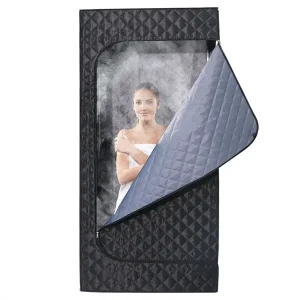
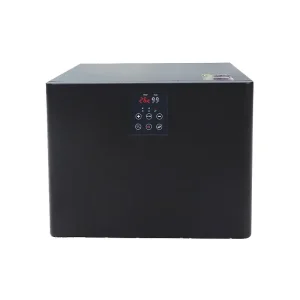
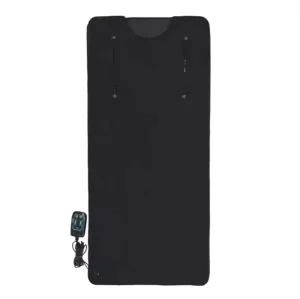
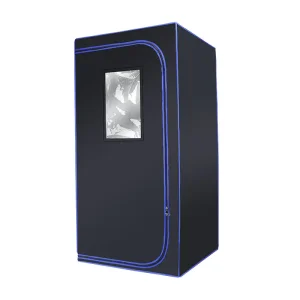
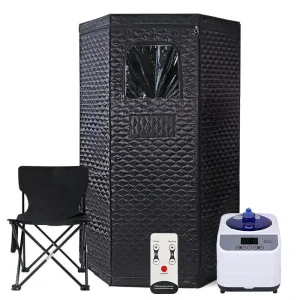
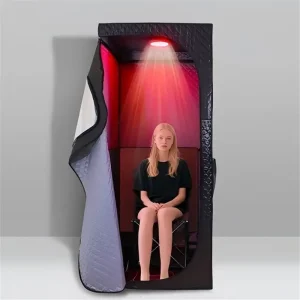
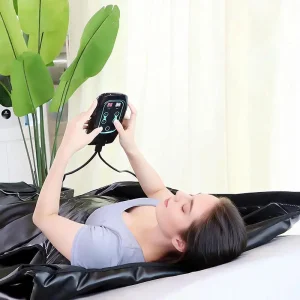
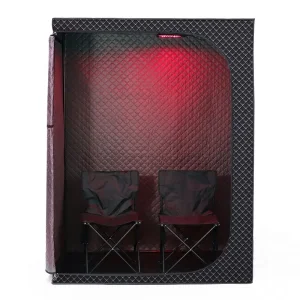
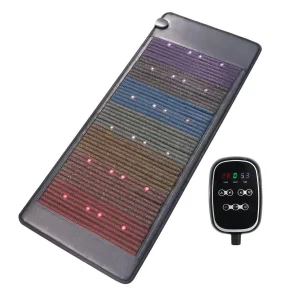
Explore our integrated thermal wellness catalog including heavy-duty chillers, acrylic plunge tubs, and multi-zone far-infrared therapy systems for turnkey project deployment.