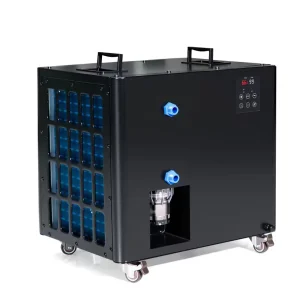
Factory-calibrated chillers, all-in-one contrast vessels, and far-infrared systems engineered for seamless integration into residential basements, commercial recovery lounges, and professional athletic cellars.
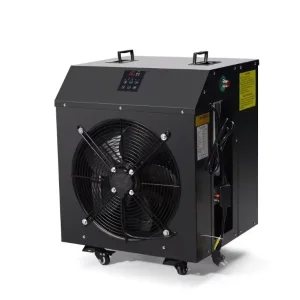
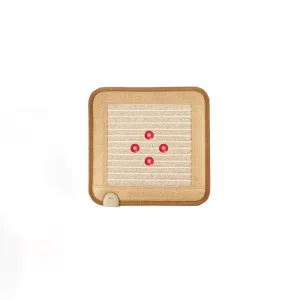
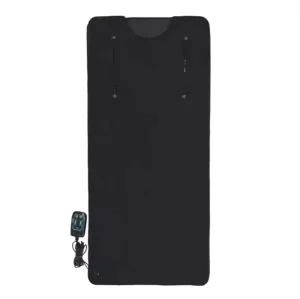
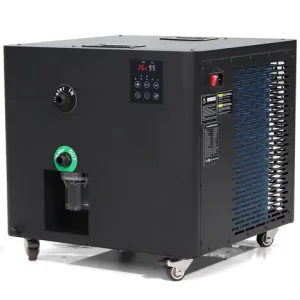
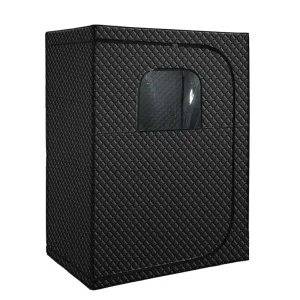
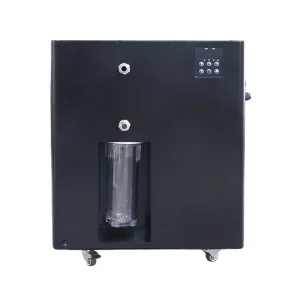
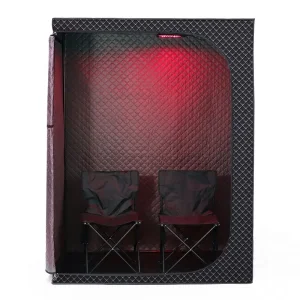
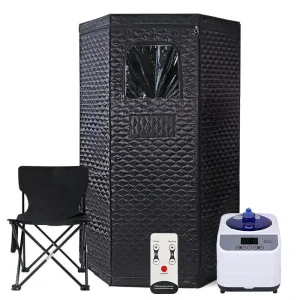
Deploying high-performance cold plunge refrigeration in subterranean environments introduces distinct psychrometric, acoustic, and thermodynamic challenges that outdoor installations never encounter.
Basements exhibit naturally suppressed ventilation and higher relative humidity (RH). When a water chiller pulls a cold plunge tub down to 2°C (35.6°F), the tub’s outer walls and plumbing reach surface temperatures significantly lower than the room’s dew point. Without proprietary thermal breaks and closed-cell elastomeric insulation, condensation forms rapidly, precipitating structural mold, subfloor rot, and indoor air degradation.
Every refrigeration cycle operates on thermodynamic energy transfer: heat extracted from plunge water plus electrical compressor heat must be rejected into surrounding ambient air. In an unventilated 400 sq. ft. basement cellar, a continuous 1.5HP chiller running under heavy thermal load can elevate ambient temperature by 4°C to 8°C, choking compressor COP. Our factory systems offer dual-ducted air exhaust ports or external hydronic split loops.
Subterranean concrete foundation slabs act as acoustic soundboards. Low-frequency harmonic hums generated by rotary compressors and water circulating pumps can reverberate throughout residential structures. Dongda basement-optimized chillers feature floating dual-stage rubber-dampened sub-chassis, variable-speed brushless DC fan blades, and acoustic-damping sound blankets, keeping sound pressure below 48 dBA.
Industrial thermal engineers calculate that baseline residential basement plunge tubs require 25% higher reserve cooling capacity than open-air setups. This headroom compensates for ambient heat stratification, thermal radiation from domestic heating conduits, and minimal subterranean convective airflow. Sizing guidelines suggest 0.5HP for containers up to 350 liters, 1.0HP for 350–600 liters, and 1.5HP dual-voltage configurations for high-turnover recovery baths exceeding 600 liters.
Analyzing the macro-economic forces driving contrast therapy adoption across North America, the European Union, and Australasia, along with industrial manufacturing scaling requirements.
The global athletic recovery and cryotherapy wellness equipment sector has transitioned from an elite athletic specialty into an expansive, institutionalized consumer and commercial category. Driven by clinical peer-reviewed research highlighting the physiological benefits of cold water immersion (CWI)—including norepinephrine release, systemic inflammation suppression, and parasympathetic nervous system reactivation—the demand for automated, ice-free cold plunge solutions has surged at an annualized CAGR exceeding 14.8%.
Historically, end-users relied on manual ice procurement, an unscalable method generating erratic water temperatures, bacterial contamination vectors, and excessive operating expenses. The modern market mandates automated thermodynamic units capable of maintaining constant target temperatures between 2°C and 5°C with zero intervention. This transition has concentrated production within high-capacity, vertically integrated manufacturing hubs.
Comparing multi-tier water chiller models engineered for subterranean plunge integration, commercial high-load cycling, and contrast therapy.
| Model Classification | Compressor & Power | Eco Refrigerant | Flow & Heat Exchanger | Target Cooling Range | Ingress & Sanitation | Optimal Deployment |
|---|---|---|---|---|---|---|
| 0.3HP Compact Series | Hermetic Rotary / 280W | R290 (GWP 3) | 800 L/h / Pure Titanium | 3°C – 40°C (37.4°F - 104°F) | IPX4 / Integrated 5-Micron | Residential Cellars, Inflatable Tubs |
| 0.3HP High-End UV Model | High-COP Rotary / 330W | R290 (GWP 3) | 1000 L/h / Titanium Coaxial | 3°C – 42°C (37.4°F - 107.6°F) | IPX4 / 254nm Ozone-Free UV-C | Boutique Spa Suites, Luxury Pods |
| 0.5HP Custom Pro Model | Industrial Inverter / 550W | R290 (GWP 3) | 1200 L/h / 4-Point Quick Connect | 2°C – 42°C (35.6°F - 107.6°F) | IPX5 / UV-C + Micro-Strainer | Dedicated Basement Recovery Tubs |
| 1.0HP Custom Heavy-Duty | GMCC/Panasonic / 950W | R32 / Low-GWP | 1800 L/h / Brazed Plate Titanium | 2°C – 45°C (35.6°F - 113°F) | IPX5 / Ozone & UV Sanitization | High-Frequency Family & Private Gyms |
| 1.5HP Commercial Dual-Volt | Commercial Rotary / 1450W | R32 / 110V & 230V | 2500 L/h / Dual Shell-and-Tube | 2°C – 45°C (35.6°F - 113°F) | IPX5 / Continuous Ozone + Dual UV | Commercial Wellness Hubs, Sports Clubs |
Subterranean cold plunges operate in high-sediment, closed-loop ecosystems. While coaxial titanium heat exchangers provide unyielding resistance against dissolved bath salts, Epsom compounds, and mild sanitizers, brazed plate exchangers offer 30% higher heat transfer density per square centimeter. Dongda's custom factory runs allow B2B clients to specify titanium brazed plate exchangers coated with anti-corrosive passivation layers, optimizing both durability and heat transfer efficiency.
Thermal pull-down curves determine customer satisfaction. A standard 400-liter tub filled with 20°C (68°F) tap water must reach therapeutic 3°C (37.4°F) thresholds reliably. A 0.5HP chiller typically achieves this in approximately 4.5 hours in a 21°C basement. Upgrading to a 1.5HP commercial chiller drops pull-down duration to under 90 minutes, providing the continuous chilling recovery cycles required for high-turnover sports clinics.
Basement installations require stringent electrical isolation and environmental refrigerant compliance to meet municipal inspection codes across North America, Europe, and the UK.
Basements are classified as damp locations under the National Electrical Code (NEC Article 680). High-performance chillers must feature integrated Class A Ground Fault Circuit Interrupters (GFCI) with trip thresholds under 5mA to prevent electrical shock in wet areas. Our North American export models comply with UL 60335-2-40 standards, running on dedicated 110V-120V 15A/20A lines with shielded cables and waterproof quick-disconnect terminations.
The European Union's updated F-Gas Regulation (EU 2024/573) mandates aggressive phase-downs of fluorinated refrigerants with high Global Warming Potential (GWP). Dongda chillers utilize natural R290 (propane) hydrocarbon refrigerant with a GWP of only 3 and zero Ozone Depletion Potential (ODP). Fully audited under CE Low Voltage Directive (LVD) and Electromagnetic Compatibility (EMC), each unit is certified leak-free via mass spectrometry helium chambers.
Basement drainage lines often sit below municipal sewer main invert levels, necessitating sump pump ejection. Sourcing institutional cold plunges requires strict adherence to international plumbing codes (IPC). Dongda integrated cold tubs include dual check-valves, mechanical air gaps, and anti-siphon drainage ports to safeguard domestic potable water systems from accidental back-siphonage.
Versatile structural and engineering configurations adapted to distinct real-world installations across the globe.
In high-density luxury residential developments across North America and Europe, homeowners convert subterranean square footage into dedicated recovery centers. These suites typically pair our 1.0HP water chiller connected to a custom acrylic or marine-grade 316 stainless steel plunge tub with a full-spectrum far-infrared sauna. The primary engineering goal is minimal sound transmission and clean architectural integration, relying on ducted fresh-air exchange and concealed under-deck plumbing manifolds.
Urban basement commercial recovery studios require high equipment uptime. With back-to-back clients using cold plunge baths every 15 minutes, standard chillers experience rapid thermal decay. Installing our 1.5HP heavy-duty chillers with integrated dual-stage UV-C sterilization and ozone infusion maintains clean water clarity and sustained 3°C temperatures through 14 hours of daily commercial operation, meeting municipal public bath sanitation standards.
Elite collegiate and professional sports facilities often place hydrotherapy pools in stadium basement concourses. These environments require multi-person plunge vessels exceeding 1,200 liters. Dongda engineers design custom multi-manifold chiller clusters using dual 1.5HP units plumbed in parallel. This redundancy guarantees fail-safe operation: if one refrigeration circuit undergoes routine maintenance, the secondary circuit preserves base cooling to keep athletes on their recovery schedule.
In cold-climate subterranean installations (such as Alpine or Scandinavian chalets), basement ambient temperatures can drop below 8°C in winter. Standard chillers can freeze their heat exchanger coils under these conditions. Dongda's reverse-cycle heat pump chillers include automated hot-gas bypass defrost protocols and dual heating capabilities up to 45°C (113°F). This empowers operators to convert their plunge tub into a soothing hot tub during winter, maintaining seasonal flexibility.
Discover the next generation of intelligent, energy-efficient thermodynamic plunge hardware emerging from our Dongda R&D laboratories.
Our upcoming 2027 platform replaces standard single-speed rotary units with Full DC Inverter Variable Refrigerant Flow (VRF) technology. By modulating compressor motor speeds dynamically between 15Hz and 90Hz, the system maintains target water temperature to within ±0.1°C, slashing continuous energy consumption by 38% and extending system operational lifespans past 10 years.
Modern commercial contrast suites demand remote oversight. Next-gen Dongda chillers feature embedded Wi-Fi/Bluetooth Tuya and Matter IoT chips. Facility managers can monitor real-time water flow rates, filter saturation differentials, UV bulb runtimes, refrigerant head pressures, and power consumption from a centralized dashboard, receiving automated alerts before maintenance issues escalate.
Addressing the basement heat rejection challenge, our advanced research teams are patenting a closed-circuit hydronic heat-recovery manifold. Rather than venting waste heat into the basement, the system redirects thermal energy into pre-heating residential domestic hot water tanks or supplementing nearby infrared saunas, elevating total facility COP to an industry-leading 4.8.
Detailed technical insights for B2B distributors, architects, interior designers, and commercial wellness operators.
BTU/h sizing depends on four factors: total water volume, initial water pull-down delta, ambient basement air temperature, and insulation efficiency. The baseline formula is: BTU = (Lbs of Water) × (Delta T in °F). For a 100-gallon (834 lbs) tub cooling from 70°F down to 40°F (Delta T = 30°F), the net thermal load requires 25,020 BTUs.
To reach target temperatures within a reasonable 4-hour window, the chiller must deliver roughly 6,255 BTU/h of effective cooling capacity. Accounting for ambient basement radiant heat and pump friction heat (+25%), an engineer should specify an 8,000 BTU/h chiller, making a 0.5HP or 1.0HP system the ideal match.
Preventing condensation requires addressing the surface temperature profile across all tub walls, pipes, and fittings. In a basement with 21°C (70°F) ambient air and 65% relative humidity, the dew point sits at 14°C (57°F). Any surface cooler than 14°C will sweat immediately.
Dongda solves this by applying 50mm high-density polyurethane spray foam insulation between the acrylic/stainless liner and the outer chassis, breaking the thermal bridge. Tub plumbing lines are fully wrapped in pre-formed, closed-cell elastomeric nitrile rubber sleeves. We also recommend pairing installations with dedicated basement dehumidification to maintain ambient RH below 50%.
Yes, provided the utility closet meets minimum airflow ventilation standards. A 1.0HP chiller rejects approximately 3.0 kW of continuous thermal energy into surrounding air. If sealed inside an unventilated closet, ambient temperatures will exceed 40°C in under an hour, triggering high-head-pressure thermal safety cutoffs.
To ensure steady operation, the closet must feature dedicated intake and exhaust louvers providing at least 450 CFM of active airflow, or direct ducting from the chiller's exhaust port to an adjacent conditioned space or outdoor vent.
For installations where the chiller sits alongside the tub, 1-inch (25mm) or 3/4-inch (19mm) ID reinforced food-grade PVC tubing or 316 stainless steel flexible hoses are standard. If the chiller is located in an adjacent basement utility room (10–15 meters away), friction head loss rises sharply.
In remote utility configurations, pipe diameter should increase to 1.25 inches (32mm) schedule-40 PVC to limit friction resistance, paired with an upgraded magnetic drive pump delivering at least 6.5 meters of dynamic head pressure to preserve factory flow rates (1,200 L/h to 1,800 L/h) through the heat exchanger.
For standard private-label branding (custom laser-etched metal badging, silk-screened housing logos, and tailored retail packaging), our base MOQ begins at 10 units. For full industrial design projects—such as bespoke exterior chassis tooling, proprietary digital controller firmware, or custom internal plumbing layouts—tooling MOQs typically start at 50 to 100 units.
Standard OEM sample production runs take roughly 15 to 20 business days. Bulk containerized production (20GP / 40HQ) is delivered within 30 to 40 days, backed by comprehensive pre-shipment video inspection audits and full CE/FCC/RoHS test documentation per batch.
Using concentrated chlorine or bromine in enclosed basements creates airborne chloramines that corrode surrounding metals, cause eye irritation, and damage residential finishes. Dongda chillers employ a multi-stage non-off-gassing sanitization system.
Water first passes through a 5-micron washable pleated sediment filter to remove physical debris, followed by an in-line 254nm ultraviolet (UV-C) chamber that neutralizes bacteria and viruses on a cellular DNA level. This is paired with an automated corona-discharge ozone injection manifold with a built-in ozone destruction degasser, ensuring zero residual ozone escapes into basement air.
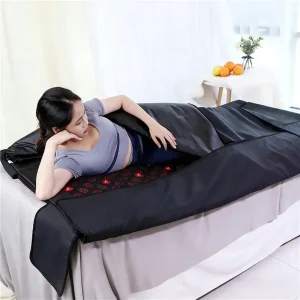
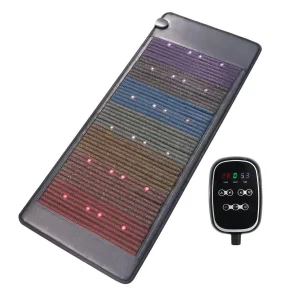
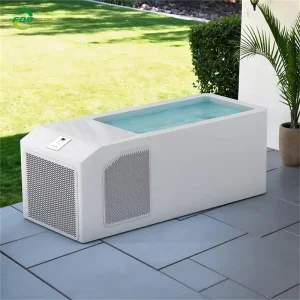
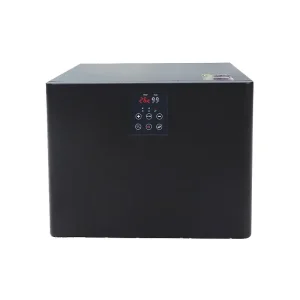
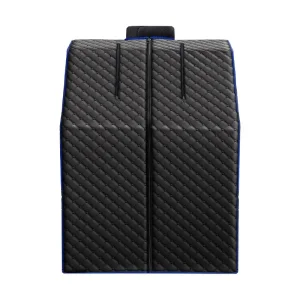
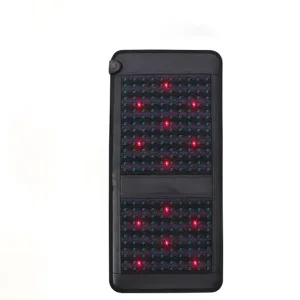
Discover our complementary line of contrast therapy enclosures, multi-zone far-infrared blankets, acrylic integrated plunge vessels, and bio-magnetic PEMF systems.
From initial industrial 3D CAD modeling and CNC chassis fabrication to automated pressure testing and global ocean freight management.
Our dedicated Guangzhou R&D team refines custom exterior housings, quick-connect plumbing configurations, branded companion apps, and full retail packaging to match your brand's aesthetic standards.
Every chiller undergoes a continuous 72-hour pressure, leak, and thermal burn-in test cycle, with documented ISO9001, BSCI, CE, FCC, and RoHS compliance certificates available for streamlined regional customs clearance.
Carefully engineered exterior packaging dimensions maximize pallet utilization across 20GP and 40HQ ocean freight shipping containers, lowering per-unit landed costs to boost your distribution margins.
Work directly with English-speaking technical sales engineers who assist with chiller horsepower sizing calculations, electrical certification dossiers, spare parts provisioning, and rapid after-sales RMA support.