How to Choose an Air Cooled Chiller for Industrial Use?

Time:2026-11-02 Author:Sienna
0%

Choosing an air-cooled chiller for industrial use is not just a matter of matching a capacity number. The right unit must suit the process, site conditions, operating schedule, and maintenance resources. Start by documenting the required cooling load and the temperatures your process actually needs. A production line with steady demand may need a different configuration from equipment that starts and stops throughout the day.

Small details matter. Confirm the fluid type, flow rate, and required leaving-fluid temperature with your equipment or process engineer. Then check the site’s highest expected outdoor temperature, available footprint, ventilation path, and electrical supply. A unit placed beside a hot exhaust outlet or in a restricted enclosure may struggle to reject heat. Ask about sound levels, coil cleaning access, controls, and service intervals—not only purchase price.

An Air Cooled Chiller For Industry should be evaluated against real operating conditions, not an idealized catalog rating. Compare published performance at the temperatures your facility expects, and ask the supplier to explain any assumptions behind its selection. Consider seasonal load changes and whether production can tolerate downtime during maintenance. A spreadsheet can make a choice look certain, but site airflow and future process changes are easy to underestimate. That deserves a second look. No single model fits every plant; a sound selection balances dependable cooling, practical installation, energy use, and support available after commissioning.
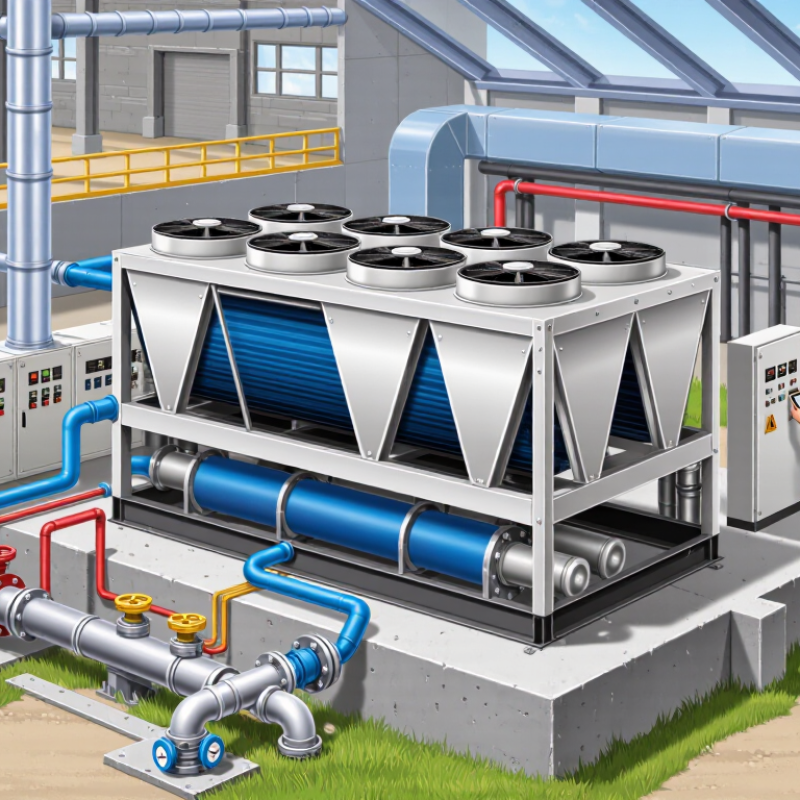
How to Choose an Air Cooled Chiller for Industrial Use?

Define Peak Process Load and Size the Chiller for Required Cooling Capacity

Start with peak process load, not average daily demand. List each machine, tank, and heat-producing operation that may run at the same time. Record fluid flow, inlet and outlet temperatures, operating hours, and production schedules. A real production line rarely follows a neat spreadsheet. Check startup surges and overlapping batches against operating logs or temporary measurements.

Estimate heat removal from measured flow and temperature change. For water, use its specific heat; glycol mixtures require different property values. Include heat entering through pumps, exposed pipework, and nearby equipment when it affects the process loop. Small details matter. Verify the estimate with a qualified engineer if the load changes sharply between shifts or product types.

Choose chiller capacity at the expected peak outdoor temperature and required leaving-fluid temperature, not just a catalogue’s nominal rating. Confirm the unit can deliver that capacity under those conditions. Add a reasonable allowance for uncertainty and future changes, but avoid oversizing by habit; frequent short cycling can reduce efficiency and control stability. Measure twice. I would revisit the load estimate after commissioning, because actual production patterns can expose assumptions that looked sound on paper.

Set Water Temperatures: AHRI 550/590 Rates at 54°F Entering and 44°F Leaving

When comparing air-cooled chillers, check what the stated capacity means. AHRI 550/590 ratings use chilled water entering at 54°F and leaving at 44°F. That 10°F temperature difference gives buyers a consistent basis for comparing published performance. It does not guarantee the same output in every plant. The reference point is useful, not universal.

Match the rating conditions to your process. A production line may need colder leaving water, or a different temperature difference, which can change chiller capacity and energy use. Check required flow, operating hours, and the hottest expected outdoor-air temperature. That matters. At a dusty site, clogged coil surfaces can also reduce heat rejection unless maintenance keeps pace. Ask for performance data at your actual design conditions, not only the standard rating point. Confirm whether the selection accounts for glycol, fouling allowances, and part-load operation. Small details add up. I have seen temperature assumptions overlooked during early sizing; it is worth checking them again before specifying equipment. An AHRI rating helps establish a reliable comparison, but it cannot replace a clear process profile.

Adjust Capacity for Site Climate: AHRI’s Standard Rating Uses 95°F Outdoor Air

An AHRI capacity rating at 95°F outdoor air provides a consistent benchmark for comparing air-cooled chillers. It does not promise the same output at every industrial site. When outdoor air gets hotter, the condenser has more difficulty rejecting heat, and available cooling capacity can decline. That gap matters. A facility in a hot inland area may regularly see afternoons above the rating condition, while a coastal site may face humid air and salt exposure. Check local design-day temperatures, not just annual averages. A mild average can hide a punishing peak.

Ask for performance data at the site’s expected peak temperature and required chilled-water supply temperature. Confirm the unit can meet the process load under those combined conditions, then review the selection with the manufacturer or a qualified engineer. Keep an eye on altitude and airflow around the installation; a chiller boxed beside a wall may not breathe as its rating assumes. Numbers need context. A larger unit may seem like safe insurance, but oversizing can increase cycling and reduce efficiency during lighter loads. And the weather data may be imperfect. Recheck the assumptions against operating records, especially if production runs hardest during the hottest months.

Compare Full-Load and Part-Load Efficiency Using AHRI 550/590 Metrics

How to Choose an Air Cooled Chiller for Industrial Use?

A strong chiller selection compares both full-load and part-load performance. AHRI 550/590 provides a consistent method for rating water-chilling packages. Its IPLV combines efficiency at 100%, 75%, 50%, and 25% load, with the greatest weighting at lower loads. Ratings may appear as COP or kW/ton, so compare the same unit and measurement basis. Full-load efficiency still matters when production runs steadily near peak demand.

Tips: Check whether the figure is IPLV or NPLV. IPLV uses standard rating conditions; NPLV uses specified nonstandard conditions. Match leaving-water temperature, entering-air temperature, and capacity before comparing equipment. A low IPLV can be useful, but it does not guarantee low energy use at your site. That distinction matters.

Review the plant’s hourly load profile, not only its design-day peak. A factory with frequent shifts or seasonal production may spend many hours at partial load. Ask for certified AHRI data and the performance table behind the headline number. Also check minimum operating capacity and ambient-temperature limits. Site conditions can differ from rating conditions; I have seen that gap overlooked in early comparisons. Good numbers deserve a careful read.

How to Choose an Air-Cooled Chiller for Industrial Use? — Compare Full-Load and Part-Load Efficiency Using AHRI 550/590 Metrics

Compare certified performance at full and part load, then check that the chiller can meet the facility’s actual capacity, operating temperatures, and ambient conditions.

AHRI 550/590-style rating points and an illustrative IPLV calculation
Rating point Load factor Weight in IPLV Entering outdoor air temperature Example A efficiency (kW/ton) Example B efficiency (kW/ton)
Full load 100% 1% 95°F (35°C) 1.20 1.15
Part load 75% 42% 80°F (26.7°C) 1.05 1.00
Part load 50% 45% 65°F (18.3°C) 0.95 0.90
Part load 25% 12% 55°F (12.8°C) 1.05 1.10
Weighted Integrated Part-Load Value (IPLV) 1.0065 kW/ton 0.9685 kW/ton
Comparison Example B has the lower illustrative IPLV; lower kW/ton indicates less input power per ton of cooling at the stated rating points.
Practical selection checks
Check What to compare Why it matters
Full-load efficiency Certified full-load kW/ton or EER at the specified rating conditions Useful when the chiller often runs near design load; confirm the rating matches the required leaving chilled-water temperature and site conditions.
Part-load efficiency IPLV for standard rating conditions, or NPLV for application-specific conditions Many systems spend substantial time below peak load. NPLV may be more representative when site temperatures or operating conditions differ from standard ratings.
Capacity at design conditions Net cooling capacity at the project’s design ambient temperature and chilled-water temperatures Rated nominal capacity alone may not show whether the unit can meet the actual peak load in hot weather.
Operating range and controls Minimum stable capacity, staging or modulation method, and permitted ambient and water-temperature ranges Helps assess cycling, temperature control, and performance during low-load operation.
Electrical and installation requirements Maximum electrical demand, starting current, sound data, footprint, and service clearances Confirms compatibility with the site’s electrical supply, layout, and operating constraints.

Calculation and data note: IPLV is calculated here as 0.01 × full-load efficiency + 0.42 × 75%-load efficiency + 0.45 × 50%-load efficiency + 0.12 × 25%-load efficiency. The example efficiencies are illustrative values created solely to demonstrate the calculation; they are not measured or certified product data. For procurement, compare current AHRI-certified ratings and verify the applicable standard edition, rating conditions, and project-specific NPLV where appropriate.

Check Ambient Limits, Power Supply, Refrigerant, and N+1 Redundancy

Select an air-cooled chiller for the hottest air it will actually face, not the annual average. Check its published operating range and cooling capacity at your site’s summer design temperature. A unit rated at 35°C may deliver less capacity when rooftop air reaches 42°C. Allow for hot discharge air recirculating around the coils, plus dust and restricted airflow.

Small details matter. Confirm voltage, phase, frequency, running current, and starting current against the site switchboard. A system may handle normal operation but trip during compressor start. Request performance data at design and part load, not just a headline efficiency figure.

Refrigerant affects service planning and climate impact. The IPCC Sixth Assessment Report, Working Group I, Table 7.15, gives 100-year global warming potential values of 2,256 for R-410A and 771 for R-32. Compare refrigerant options alongside charge size, safety classification, and local service capability; GWP alone is not enough.

For critical production, size N+1 capacity so remaining chillers can meet the required load after one unit fails. Three 50% modules can provide full load with one offline, provided piping and electrical arrangements support it. Redundancy costs space and capital. It can still be cheaper than lost production. Check isolation valves, controls, and standby power against the actual failure scenario.

Paper redundancy can disappoint.

FAQS

Why should chiller sizing start with peak process load?

Several machines, tanks, and heat-producing operations may run together. Average daily demand can hide those short, heavy periods.

What information helps estimate process cooling load?

Record fluid flow, inlet and outlet temperatures, operating hours, and production schedules. Check startup surges against operating logs.

Do pumps and nearby equipment affect the load estimate?

They can. Include heat from pumps, exposed pipes, and nearby equipment when it enters the process loop.

What temperatures are used for a common chiller rating reference?

The reference uses water entering at 54°F and leaving at 44°F. It supports comparison, but does not represent every plant.

Why request performance data at actual site conditions?

Colder leaving water, glycol, and hotter outdoor air can change capacity and energy use. Ask for data matching your process.

Should a chiller be sized with extra capacity?

Allow for reasonable uncertainty and future changes, but avoid oversizing by habit. Short cycling can hurt efficiency and control stability.

How should full-load and part-load efficiency be compared?

Compare figures using the same measurement basis and rating conditions. Review performance at 100%, 75%, 50%, and 25% load.

Is a strong part-load rating enough to predict site energy use?

Not by itself. Review hourly load, minimum operating capacity, and ambient limits. I would check the assumptions again after commissioning.

Conclusion

Choosing an Air Cooled Chiller For Industry starts with defining the process’s peak cooling load, including expected operating conditions and any future capacity needs. Select a chiller that can meet the required load without relying on assumptions about average demand alone. Confirm the specified water temperatures, since AHRI 550/590 standard ratings use 54°F entering water and 44°F leaving water. If your process requires different temperatures, check how the change affects the unit’s available capacity and efficiency.

Next, account for the installation site. Standard ratings use 95°F outdoor air, so hotter local conditions may reduce cooling capacity or affect performance. Compare both full-load and part-load efficiency using consistent AHRI metrics, then verify that the chiller’s ambient operating limits, electrical supply, and refrigerant requirements suit the facility. For critical processes, consider N+1 redundancy so cooling can continue if one unit is unavailable. Together, these checks help ensure the selected chiller fits both operating demands and site conditions.


Sienna

Sienna

Sienna is a skilled marketing professional with a deep expertise in our company’s core products and services. With a passion for innovation and detail, she plays a pivotal role in crafting insightful blog posts that not only highlight the unique features of our offerings but also provide valuable......