A global buyer comparing the 7 Best Air Cooled Chiller Systems needs more than a headline efficiency figure. The right Air Cooled Chiller System must match the building’s cooling load, local summer temperatures, water temperatures, and operating schedule. A unit serving a hotel in a hot coastal city may face very different demands from one supporting a factory in a cooler region. Small details count.
This guide examines practical differences among leading options, including compressor design, part-load performance, sound levels, controls, service access, and installation footprint. A rooftop unit beside occupied offices, for example, may need different noise and access considerations than equipment placed in an open industrial yard. Buyers should also review warranty terms, available local support, and the manufacturer’s published performance data. Those figures are useful, but they cannot predict every site condition.
No shortlist is final. Equipment availability and service networks vary by country, and product specifications can change. The most dependable choice comes from checking current documentation and comparing units at the project’s actual design conditions. Ask suppliers to explain assumptions behind their performance ratings, especially ambient temperature and leaving-water temperature. That matters.
The comparisons ahead are intended to support informed screening, not replace a qualified engineering review. Even careful research can miss a site-specific constraint. That is worth remembering. A little verification before purchase can prevent a poor fit, unexpected operating costs, or difficult maintenance later.
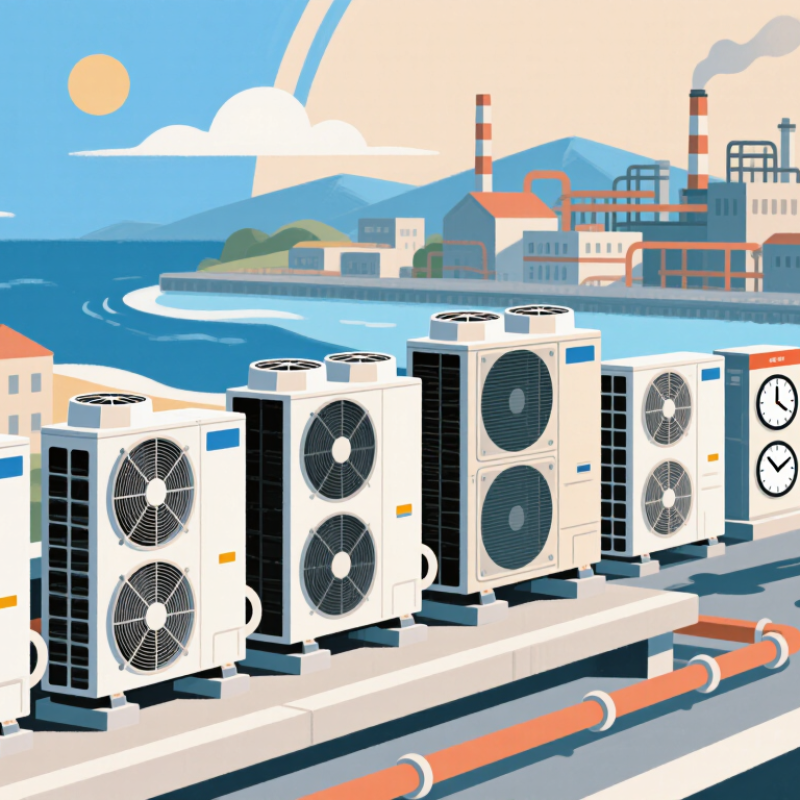
An air-cooled chiller removes heat from a building’s water loop and releases it outdoors. In the evaporator, refrigerant absorbs heat from return water. The compressor raises the refrigerant’s pressure and temperature. Condenser coils and fans transfer that heat to outdoor air, while an expansion device lowers refrigerant pressure before the cycle repeats. Airflow matters. A blocked coil or restricted service clearance can increase condensing temperature and compressor workload, especially on hot afternoons.
The International Energy Agency’s 2018 The Future of Cooling report estimated that space cooling used about 2,020 TWh of electricity worldwide in 2016, roughly 10% of global electricity consumption. This figure covers space cooling broadly, not chillers alone, but it puts efficiency in context. During site checks, record chilled-water temperatures, outdoor dry-bulb temperature, and electrical input under stable load. Compare similar operating conditions; a nameplate value alone tells an incomplete story. Small details count. Coil cleanliness, fan operation, water flow, and sensor calibration can all affect performance readings. A simplified cycle diagram is useful, but it rarely shows the control interactions that complicate real operation.
| System Type | Typical Cooling Capacity | Operating Principle | Main Advantages | Common Applications | Key Selection Consideration |
|---|---|---|---|---|---|
| Fixed-Speed Scroll Chiller | Approximately 20–200 kW | One or more scroll compressors circulate refrigerant. Outdoor fans move ambient air across the condenser coil to reject heat. | Simple construction, relatively low maintenance, and a good fit for smaller cooling loads. | Small commercial buildings, retail spaces, clinics, and light industrial processes. | Capacity control is less flexible than variable-speed systems; check how the unit performs when the load is low. |
| Modular Scroll Chiller | Approximately 30–500 kW for a combined installation | Multiple chiller modules operate together. Compressors and fans stage on or off as cooling demand changes. | Expandable capacity, operating redundancy, and the ability to match output to changing loads. | Buildings with phased growth, mixed-use facilities, and sites where continued operation is important. | Allow adequate space for airflow and service access; confirm how the modules share load and respond to faults. |
| Fixed-Speed Screw Chiller | Approximately 150–1,500 kW | Twin-screw rotors compress refrigerant vapor. The condenser coil and fans discharge heat directly to outdoor air. | Suitable for larger, steady cooling loads and generally offers a wide operating range. | Manufacturing facilities, large commercial buildings, and central chilled-water systems. | Review part-load performance, sound levels, and the manufacturer’s operating limits at high outdoor temperatures. |
| Variable-Speed Screw Chiller | Approximately 150–1,500 kW | A variable-frequency drive adjusts compressor speed to follow cooling demand; condenser fans may also vary their speed. | Can improve part-load operation and reduce cycling when the building load changes frequently. | Facilities with variable occupancy, extended operating hours, or substantial seasonal load changes. | Check drive compatibility with the electrical supply, local service support, and performance at the site’s design conditions. |
| Variable-Speed Scroll Chiller | Approximately 10–200 kW | A variable-speed scroll compressor adjusts refrigerant flow, while fans reject condenser heat to the outdoor air. | Compact capacity control can help maintain stable chilled-water temperatures under fluctuating loads. | Small and mid-sized commercial buildings, laboratories, and process cooling systems. | Compare the unit’s minimum operating capacity with the site’s lowest expected cooling load. |
| Air-Cooled Chiller with Integrated Free Cooling | Approximately 100–1,500 kW | When outdoor air is sufficiently cool, a heat exchanger transfers heat from the water circuit to outdoor air, reducing or bypassing compressor operation. | Can reduce compressor runtime in suitable climates and during cool seasons. | Data centers, industrial processes, and other applications with year-round cooling demand. | Benefits depend on outdoor temperatures, water-loop design, and operating hours; assess the local climate before selection. |
| Air-Cooled Chiller with Heat Recovery | Approximately 50–1,000 kW | A heat-recovery circuit captures some condenser heat for use in a separate hot-water or heating circuit. | Can provide useful heat while the chiller is producing cooling, reducing the need for separate heat generation. | Hotels, hospitals, food facilities, and buildings with simultaneous cooling and hot-water demand. | Confirm that cooling and heating loads occur at the same time and that the required water temperatures are achievable. |
Start with site conditions, not catalogue capacity. Compare performance at local outdoor temperatures, altitude, and water temperatures.
High temperatures and elevation can reduce available capacity. A 40°C afternoon may reveal limits hidden by mild-weather ratings.
Confirm voltage, frequency, starting current, and available fault protection. Also check installation space and sound limits.
Variable-speed units can suit changing loads, while low-ambient designs may suit colder regions. Free cooling works only when outdoor conditions allow it.
Look beyond peak efficiency. Compare part-load performance, fan power, operating hours, maintenance access, and likely repair costs.
Check structural capacity, drainage, vibration control, and delivery access. Leave room for airflow, coil cleaning, and service work.
Dust, leaves, and nearby exhaust can restrict airflow and increase power use. Coastal sites may also need protection from salt exposure.
Include installation, energy, maintenance, replacement parts, and downtime. Forecasts can look precise, but changing loads may still surprise you. That happens.
Ask for climate-specific selections, part-load data, and clear assumptions about water temperatures and airflow. Record uncertainties, too. Easy to miss.
This guide explains the fundamentals of air-cooled chiller operation, including how these systems remove heat without relying on cooling towers. It outlines the main factors global buyers can use to compare options, such as cooling capacity, efficiency, operating conditions, climate suitability, controls, maintenance needs, and project requirements. The overview also introduces seven types of Air Cooled Chiller System solutions, highlighting how their general features may suit different commercial and industrial applications.
Choosing the right system involves matching capacity and configuration to the building’s cooling load, available space, and expected usage. The guide also considers installation planning, energy performance, routine servicing, and lifecycle costs. By weighing these practical factors together, buyers can make a more informed selection and support reliable operation over the long term.