Choosing an Air Cooled Liquid Chiller is not just a matter of matching capacity to a building’s square footage. Real operating conditions matter. On a hot afternoon, high outdoor temperatures can affect performance, while a dusty condenser coil may quietly reduce heat transfer. HVAC design expert Steven T. Taylor’s work offers a useful buying principle: match equipment to measured loads and operating conditions, rather than relying on a single headline rating. That is a paraphrase of the principle, not a direct quotation.
This guide introduces seven practical checks before you request a quote. Compare cooling capacity at your actual design conditions, not only at a convenient catalog rating. Review part-load efficiency, because many systems spend long periods below peak demand. Check the unit’s footprint, service clearances, sound data, and access to routine maintenance points. Ask what controls are included and how the chiller will work with existing pumps and building systems. Look beyond the purchase price. Energy use, maintenance needs, and local service availability shape the cost over time.
Details matter. A lot.
Some decisions will remain uncertain until an engineer reviews site data. That is worth admitting. A tidy spreadsheet can miss changing loads, future expansion, or a shaded installation area that affects airflow. Use these seven buying tips as a disciplined starting point, then confirm assumptions with qualified HVAC professionals and written performance data. The best choice is rarely the largest unit or the lowest quote. It is the one that fits the real job—and can be maintained when the weather turns hot.
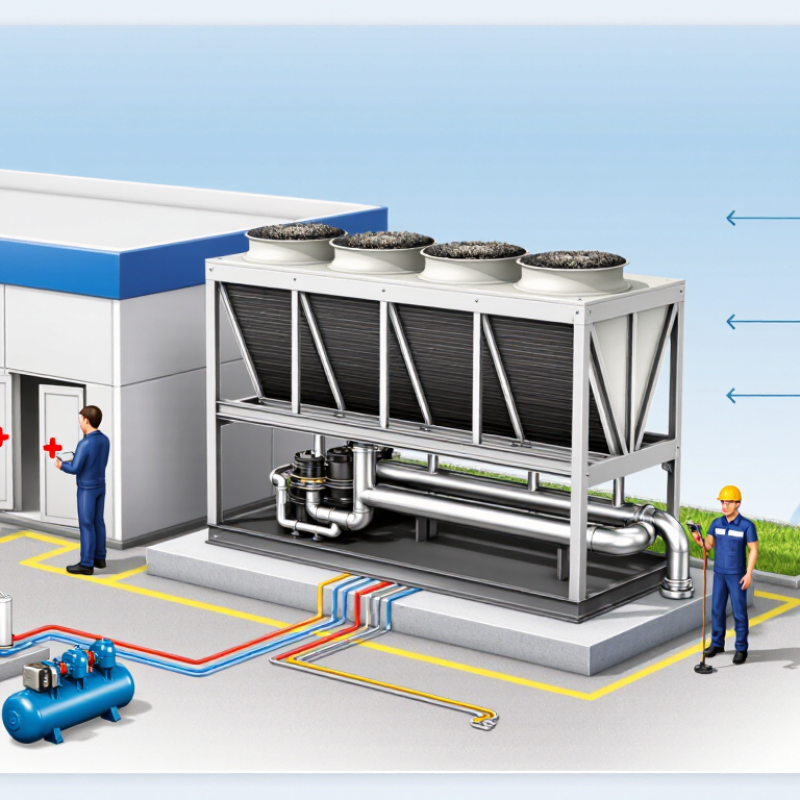
Start with the heat the process actually releases, not just the equipment’s rated capacity. Record the load in kilowatts during normal production and peak demand. Check the required fluid, flow rate, and leaving-water temperature. A five-degree difference can change the chiller size. Measure twice.
Use operating data where possible. A nameplate value may not reflect a hot afternoon or a heavily loaded shift. Note the highest outdoor temperature, site altitude, and hours of operation. Air-cooled chillers need clear airflow around their condenser coils; nearby walls or exhaust outlets can reduce performance. That matters.
Consider how the load changes during startup, cleaning, or seasonal production. Ask whether the chiller must run continuously, and whether brief temperature swings are acceptable. Check the existing pumps, pipe sizes, and available electrical supply before selecting capacity. These details affect real-world performance, not just the specification sheet. A modest allowance for future growth may be sensible, but excessive oversizing can cause short cycling and unstable temperatures. I have seen early estimates miss intermittent peaks, so treat assumptions as provisional and confirm them against measured process data.
| Tip | What to Define | Example or Planning Check | Why It Matters |
|---|---|---|---|
| 1. Establish the required cooling capacity | List the heat loads the chiller must remove, including process equipment, heat entering through piping or tanks, and any expected future additions. | Record the estimated load in kW or refrigeration tons, identify how it was calculated, and distinguish normal load from the maximum simultaneous load. | A capacity estimate based only on equipment nameplate power can be inaccurate. Confirm the actual heat transferred to the circulating fluid and avoid adding an arbitrary oversized allowance. |
| 2. Specify fluid supply and return temperatures | Define the required leaving-fluid temperature at the chiller and the expected returning-fluid temperature from the process. | For example, a process might require 7°C supply and 12°C return, giving a 5°C temperature difference. These are example values, not universal settings. | Chiller capacity and efficiency vary with leaving-fluid temperature and temperature difference. Confirm the required temperatures against the process needs and the equipment’s operating limits. |
| 3. Confirm the required fluid flow | Determine the flow needed to carry the design heat load while maintaining the required temperature difference and acceptable pressure drop. | For water, a useful estimate is: flow (m³/h) ≈ 0.86 × cooling load (kW) ÷ temperature difference (°C). For example, 100 kW at a 5°C difference is about 17.2 m³/h. | This estimate assumes water and typical properties. Glycol mixtures have different heat capacity and viscosity, so use the fluid supplier’s data and verify the flow and pump requirements for the actual mixture. |
| 4. Set the outdoor design conditions | Provide the highest expected outdoor air temperature at the chiller location, along with altitude and any unusually hot or restrictive site conditions. | Use a site-specific summer design temperature rather than an average daily temperature. Check whether the unit must operate during short periods above that value. | An air-cooled chiller rejects heat to outdoor air. High ambient temperatures and high altitude can reduce available capacity or affect operating limits. |
| 5. Identify the fluid and freeze-protection needs | Specify whether the circuit uses water or a water-glycol mixture, the glycol type and concentration, and the lowest fluid temperature the system may encounter. | State the required freeze-protection temperature and have the supplier verify the concentration, fluid compatibility, heat-transfer properties, and minimum operating temperature. | Glycol concentration affects heat transfer, flow resistance, pump power, and chiller capacity. Select freeze protection based on the site risk and system design, not by guesswork. |
| 6. Describe the load profile and control needs | Explain operating hours, seasonal changes, minimum and maximum loads, start-up frequency, and how quickly the process load changes. | Share a typical daily or weekly load pattern and note whether stable fluid temperature is needed during low-load periods or frequent process starts. | Load profile influences capacity selection, staging, control strategy, and the need for buffer volume. A design based only on peak load may not describe everyday operation. |
| 7. Check site, electrical, and service conditions | Document available voltage and phase, electrical limits, clearances for airflow, noise constraints, access for maintenance, and the route for water and power connections. | Confirm the installation footprint and manufacturer-required air clearances, and check that hot discharge air will not recirculate into the condenser intake. | Restricted airflow, inadequate service access, or incompatible electrical supply can prevent reliable operation even when the cooling capacity is otherwise suitable. |
Note: Example temperatures and flow calculations are for preliminary planning only. Final chiller selection should be checked against the actual fluid properties, site conditions, operating limits, and documented heat load.
Calculate the peak cooling load before selecting an air-cooled liquid chiller. ASHRAE Standard 183-2023 describes methods for calculating building peak heating and cooling loads; use project-specific weather, occupancy, equipment, lighting, and envelope data rather than a floor-area guess. For process systems, include heat from pumps, piping, and the process itself. Small details matter. A warm equipment room or an uninsulated pipe can shift the real load.
Check the fluid flow, too. For water, cooling capacity is approximately 1.163 × flow in m³/h × temperature difference in °C. At 20 m³/h and a 5°C difference, the calculated load is about 116 kW. This is a useful cross-check, not a substitute for a full load calculation. Compare the result with the chiller’s rated capacity at your actual outdoor design temperature and leaving-fluid temperature; air-cooled units can deliver less capacity in hotter conditions. Account for glycol only when used, since it changes heat transfer and pressure drop. I still see teams add a blanket safety margin without checking the inputs. That can oversize the unit, cause short cycling, and waste energy. Revisit the assumptions against measured operating data when available.
Example estimate: process load (42 kW), space cooling (18 kW), equipment (12 kW), and lighting and occupants (8 kW) total 80 kW. Adding a 10% design allowance (8 kW) gives a required capacity of 88 kW. Confirm the actual loads and check the chiller’s rated capacity at your design water and ambient temperatures before selecting a unit.
An air-cooled liquid chiller’s efficiency rating is useful only when its test conditions match your site. Compare COP or EER at the same entering and leaving water temperatures, ambient temperature, and load. A rating from a mild day may look excellent, then fade during a hot afternoon. Check whether the figure represents full-load efficiency or seasonal, part-load performance. Numbers need context. For variable demand, review IPLV or NPLV data and confirm the rating method behind them. Don’t compare unlike test points.
Efficiency is only half the decision. Look at cooling capacity at your design-day ambient temperature, not just nominal capacity. Check entering-water conditions and the required leaving-water temperature; colder setpoints can increase compressor work. Also compare input power, flow rate, and pressure drop against the actual system design. Small mismatches matter. Ask for performance tables across several load points, plus sound levels and operating limits relevant to the installation. Estimate annual energy use with your site’s weather and load profile, rather than multiplying one rating by operating hours. That estimate is still imperfect. Weather swings, fouled coils, and blocked airflow can shift results. Treat the spec sheet as a starting point, not a promise.
Before comparing quotes, map the chiller’s actual setting: peak outdoor temperature, sun exposure, prevailing wind, dust, and service access. A unit beside a hot exhaust wall may ingest its own discharge air. Keep airflow paths open and check specified clearances. AHRI Standard 550/590 uses 95°F (35°C) entering air as an air-cooled chiller rating condition. Request capacity and power at your local design temperature, not just that rating point. A roof sketch helps. Include pipe routes, crane access, structural loading, noise-sensitive windows, and coil-cleaning space. No shortcut here.
Refrigerant choice is a service decision, too. Check the specified refrigerant, charge, oil compatibility, technician familiarity, and future supply before signing. The IEA’s The Future of Cooling report projects global space-cooling energy demand could more than triple by 2050, reaching about 6,200 TWh annually. Ask for annual energy estimates based on your operating hours and local weather. I still see buyers accept one neat number, though real loads rarely behave so neatly. Request leak-detection provisions, recovery access, and clear service documentation. Confirm the refrigerant suits the chiller design; do not assume a later retrofit will be simple.
A good control package should display leaving-water temperature, alarm history, and operating hours in plain language. Ask whether setpoints can be adjusted safely and whether the system records faults for later review. Clear trends can help staff spot rising temperatures before they interrupt production. Small screens matter.
During a site walk, check how technicians reach filters, electrical panels, and condenser coils. Ask how often coils need cleaning in your local environment; dust, leaves, and nearby traffic can change the workload. Confirm which routine tasks your own team can handle and which require trained service personnel. Access matters.
Read the warranty before comparing prices. Check its term, covered components, labor provisions, and exclusions for installation or maintenance. Then estimate total ownership cost over the expected service life, including electricity, inspections, cleaning, repairs, and replacement parts. Compare energy use under realistic outdoor temperatures, not just ideal test conditions. Real bills vary. A spreadsheet can make estimates look precise, but actual operating hours and weather rarely behave so neatly. Ask for assumptions in writing, especially when projected savings influence the purchase decision.
Calculate the peak cooling load using project-specific weather, occupancy, equipment, lighting, and building-envelope data. For process systems, include heat from pumps, piping, and the process itself.
No. A floor-area estimate can miss heat from a warm equipment room or an uninsulated pipe. Check assumptions against measured operating data when available.
Use this estimate: capacity in kW ≈ 1.163 × flow in m³/h × temperature difference in °C. At 20 m³/h and 5°C, the result is about 116 kW. It is a cross-check, not a full load calculation.
Air-cooled chillers can provide less capacity when outdoor conditions are hotter. Compare rated capacity at your design temperature and required leaving-fluid temperature.
Yes, when used, glycol changes heat transfer and pressure drop. Include it in the system checks. Details matter.
Compare COP or EER at matching water temperatures, ambient temperatures, and loads. A rating from a mild day may not reflect performance on a hot afternoon.
Review IPLV or NPLV data, part-load performance, and the rating method. Also compare input power, flow rate, and pressure drop with the system design.
Use local weather and the site’s load profile instead of multiplying one rating by operating hours. The estimate remains imperfect; fouled coils or blocked airflow can change performance.
Choosing an Air Cooled Liquid Chiller starts with understanding the cooling requirements and operating conditions, including the process load, desired temperatures, ambient climate, and expected running hours. Use these details to calculate the required capacity, allowing for realistic peak demand without selecting an unnecessarily oversized unit. Compare energy efficiency and performance ratings under conditions that reflect the intended application, since actual performance can vary with temperature and workload.
Before purchasing, assess available space, airflow, access for installation and service, and the refrigerant requirements of the system. Consider whether the controls offer the monitoring and adjustment features your operation needs, and review maintenance demands, warranty coverage, and expected service life. Comparing the full cost of ownership—not just the purchase price—can help identify a chiller that balances reliable cooling, practical installation, and long-term operating costs.